Click on the “play” button to hear the diary episode read aloud, and click on the [anno]green tab[/anno] to learn more about a word or phrase.
Find Du Vernet on a map.
While at breakfast an older [anno]Indian Woman{note}Du Vernet’s diary mentions an “Indian Woman,” an unnamed elder who actively opposed missionary activity along the Rainy River. Read more.[/anno](who had opposed the mission, pulling up the stakes when the land was marked off) opened the door, and seeing us at breakfast, slammed it again. Then an [anno]Indian{note}Du Vernet constantly refers to the Ojibwe peoples he encounters as “Indians” – his use of the word reflects the language and concepts of his day. The category of “Indian” became a legal designation in Canada with the “Indian Act.” As a distorting collective noun for diverse Indigenous peoples the category of Indian originated in a profound error. As the story goes, when Christopher Columbus arrived in the Americas in 1492 he believed he had arrived in India – and therefore called the peoples he encountered Indians, ignoring their diverse languages, spiritual traditions, and forms of governance. Read more.
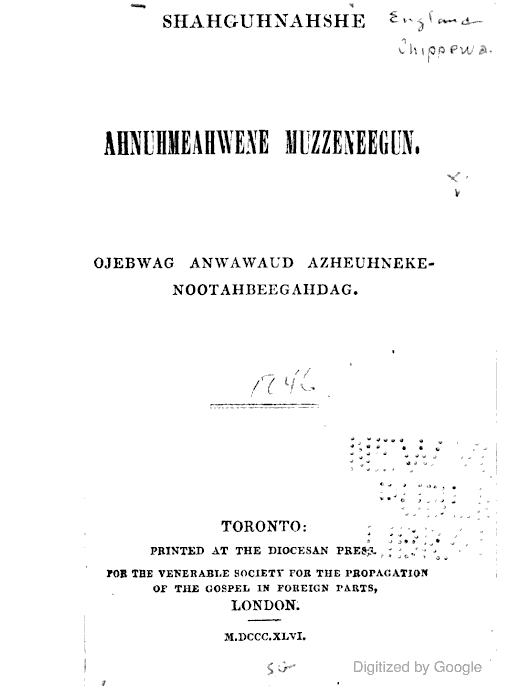
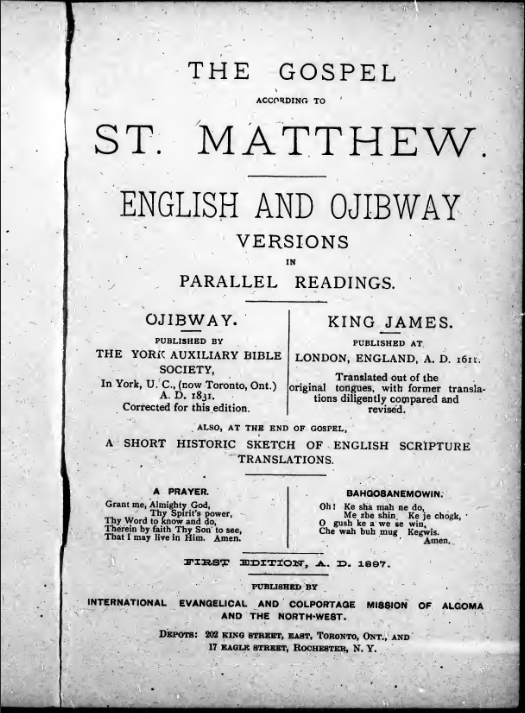
[/anno] girl came and sat down in the kitchen, and then an Indian man came in and looked round for a chair. When given one, he sat down. After breakfast I was asked to have [anno]prayers{note}Both Christian and Ojibwe people use prayer as a means of spiritual communication.[/anno] but I thought it was an opportunity not to be lost and asked Mr. Johnston to have the Indians all come in. There were four: a man, a woman, a girl, and a young man. They seemed to listen, but [anno]remained seated{note}The four Ojibwe men and women Mr. Johnston invited for prayer did not kneel. They perhaps sought to indicate that they were willing to observe the Christian rituals, but not partake of them.[/anno] while we knelt in prayer. Once two of them passed a remark in a [anno]low voice{note}In noting the quiet remarks of the Ojibwe listeners, Du Vernet shows that he is aware that not everyone at Little Forks necessarily welcomes his presence.[/anno]. Mr. Johnston read a portion of the New Testament in [anno]Ojibwa{note}Ojibwa is the Algonquian language of the Ojibwe and has many regional dialects. Read more about the Ojibwe.[/anno], then explained it and prayed in the same tongue. I prayed earnestly for the souls in [anno]heathen darkness{note}The biblical imagery of transitioning from “darkness” into “light” figured prominently in colonial thought and missionization programs in nineteenth- century Canada. Missionaries believed that by converting Indigenous peoples to Christianity, they “saved” Indigenous people from the supposed darkness of their “heathen” ceremonies. By contrast, many Indigenous people who joined Christian communities did not draw such a sharp line, and often continued to practice their Indigenous traditions alongside Christian ones.[/anno]. The man sat with half closed eyes.
[July 14th, 1898]